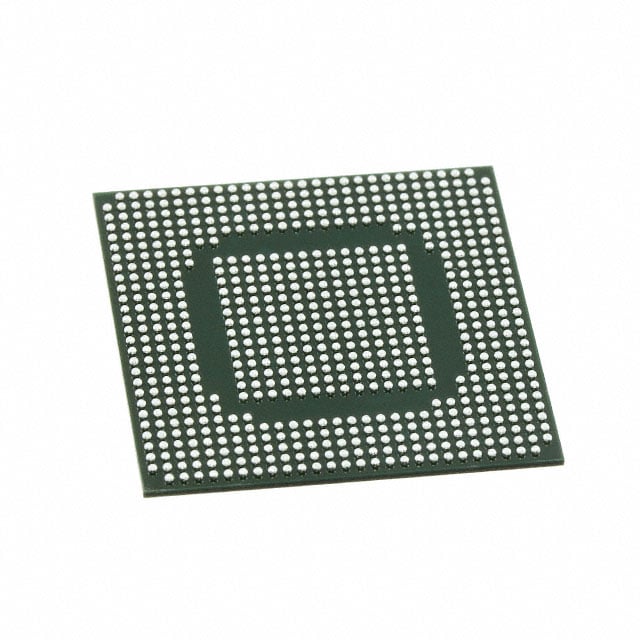
## Overview of HBM2e Integration in Agilex 7 M-Series
The Altera Agilex 7 M-Series FPGA is engineered for memory-intensive workloads that demand ultra-high bandwidth and low-latency access to large datasets. To address these requirements, the M-Series integrates High Bandwidth Memory 2E (HBM2e) directly on-package, enabling extremely fast memory access that significantly outperforms traditional off-chip DRAM in both bandwidth and latency.
## Maximum HBM2e Memory Capacity
* Integrated Capacity: The M-Series devices support up to 64 GB of HBM2e memory per FPGA. This capacity is achieved through multiple HBM2e stacks embedded in the package, each connected directly to the FPGA fabric through wide, high-speed memory channels.
* Channel Organization: HBM2e is organized into multiple independent pseudo-channels (typically 32 per stack), each providing a 128-bit interface to the FPGA. This wide channel architecture allows concurrent access to multiple memory segments, maximizing aggregate memory bandwidth.
## Performance Characteristics
* Memory Bandwidth: Each HBM2e stack in the M-Series can deliver peak bandwidth exceeding 460 GB/s, depending on the memory clock rate and number of active pseudo-channels. With multiple stacks, the total bandwidth can reach several terabytes per second, providing ample throughput for AI acceleration, HPC, and real-time data analytics.
* Low Latency Access: On-package integration reduces signal propagation delays and eliminates the need for long PCB traces, significantly lowering latency compared to discrete DDR5 or GDDR memory solutions.
* Concurrent Fabric Access: HBM2e stacks are directly accessible by FPGA fabric, DSP arrays, and AI Tensor Blocks, allowing multiple compute engines to perform memory-intensive operations simultaneously without contention.
## System-Level Benefits
* AI and HPC Acceleration: The high-capacity, high-bandwidth HBM2e allows large neural network models, deep learning datasets, or HPC simulations to be loaded entirely in memory, reducing reliance on slower off-chip memory and improving overall system throughput.
* Efficient Data Streaming: Wide pseudo-channel architecture supports parallel streaming of large data blocks, ideal for high-speed video processing, network packet inspection, and scientific computing.
* Reduced System Footprint: Integrating HBM2e into the FPGA package eliminates the need for multiple discrete memory modules, simplifying PCB design, reducing signal integrity challenges, and saving board space.
## Design Considerations
* Thermal Management: High-density HBM2e operation generates substantial heat; proper cooling and thermal dissipation strategies are required to maintain performance and reliability.
* Power Budgeting: HBM2e stacks contribute significant dynamic power, particularly under sustained high-bandwidth workloads, necessitating careful system power planning.
* Memory Controller Integration: FPGA designers must utilize the hardened HBM2e memory controllers with appropriate interface configurations, timing, and flow control to achieve peak bandwidth and low-latency operation.
## Summary
The Altera Agilex 7 M-Series FPGA integrates up to 64 GB of HBM2e memory, providing multi-terabyte-per-second bandwidth and low-latency access for memory-intensive workloads. Its wide pseudo-channel architecture and on-package integration enable concurrent access by FPGA fabric, DSP arrays, and AI Tensor Blocks, supporting high-performance AI, HPC, and real-time data processing applications. Proper thermal and power management, along with optimized memory controller utilization, is essential to fully exploit the capabilities of the integrated HBM2e memory.
icDirectory Limited | https://www.icdirectory.com/a/blog/what-is-the-maximum-hbm2e-memory-capacity-integrated-in-the-m-series-of-the-altera-agilex-7-fpga.html