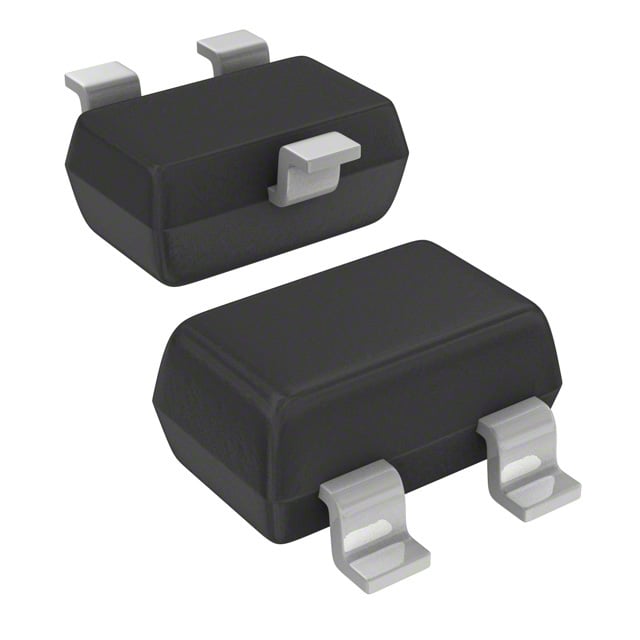
Let%27s explore the recent advancements in RF diode materials and fabrication techniques. These developments are crucial for enhancing the performance of radio frequency (RF) devices and circuits:
1. Materials Selection and Performance Enhancement:
- Researchers have been actively investigating materials to improve RF diode performance.
- Materials Selection Approaches:
- A rigorous literature survey considers two key aspects:
- Beam and Dielectric Materials: These materials impact the performance of capacitive RF micro-electromechanical systems (MEMS) switches.
- Performance Indicators:
- For beam materials: pull-in voltage, RF loss, thermal residual stress, contact resistance, thermal conductivity, and maximum displacement.
- For dielectric materials: hold-down voltage, dielectric charging, leakage current, heat dissipation, capacitance ratio, and stability.
- Ashby’s Methodology: Material indices are used to evaluate switch performance.
- Fabrication Techniques:
- Bulk Micromachining: Involves etching and shaping silicon wafers to create MEMS structures.
- Surface Micromachining: Preferred over the last few decades due to its compatibility with integrated circuits.
- CMOS-MEMS Monolithic Fabrication: Integration of MEMS components with complementary metal oxide semiconductor (CMOS) technology.
- TSMC-CMOS 0.35 μm Technology: A leading CMOS-MEMS fabrication process.
2. Hybrid Manufacturing and Multimaterials Fabrication:
- Hybrid Manufacturing:
- Combines additive and subtractive processes for prototyping microwave devices.
- Enables flexibility in material selection and design.
- Materials Coating Techniques:
- Coatings enhance RF component performance.
- Multimaterials Fabrication:
- Allows integration of different materials within microwave circuits.
3. Organic Light-Emitting Diodes (OLEDs):
- While not directly RF diodes, advancements in OLED materials and fabrication techniques impact display technologies and can indirectly influence RF devices.
- Research focuses on multilayer structures, charge injection, transport, emission, and blocking layers.
4. Two-Dimensional Tellurium-Based Diodes:
- Semiconducting two-dimensional (2D) tellurium-based diodes demonstrate RF performance.
- Metal-insulator-semiconductor (MIS) diodes and other structures show promise.
In summary, ongoing research aims to enhance RF diode performance through material advancements and innovative fabrication methods. These developments contribute to miniaturized devices, improved reliability, and better RF performance at higher frequencies¹²³⁴.
------------------------------
(1) Materials Selection Approaches and Fabrication Methods in RF MEMS .... https://link.springer.com/article/10.1007/s11664-021-08817-8.
(2) Special Issue on Emerging Materials and Processing Technologies for RF .... https://mtt.org/publications/t-mtt/special-issue-on-emerging-materials-and-processing-technologies-for-rf-microwave-applications-and-wireless-systems/.
(3) Recent advancements over a decade for organic light-emitting diodes .... https://searchworks.stanford.edu/articles/aph__158139998.
(4) Two-dimensional tellurium-based diodes for RF applications - Nature. https://www.nature.com/articles/s41699-023-00433-w.pdf.
icDirectory Limited | https://www.icdirectory.com/a/blog/what-advancements-are-being-made-in-rf-diode-materials-and-fabrication-techniques.html

☰