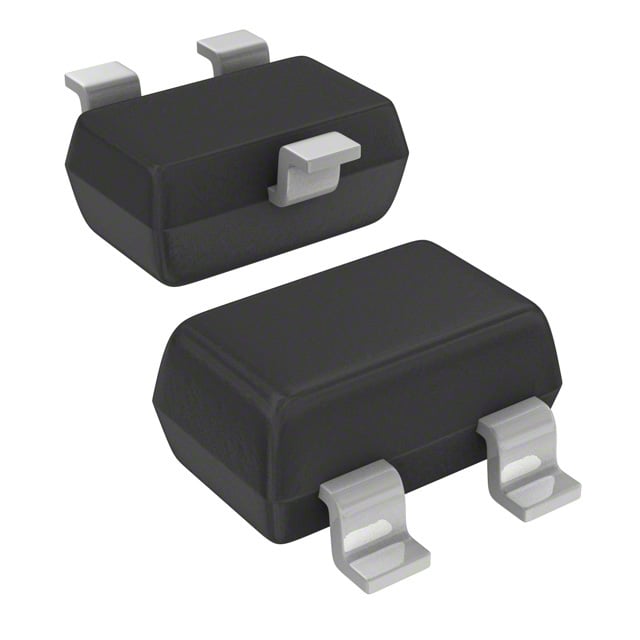
PIN diodes are semiconductor devices that serve as versatile components in electronic circuits, particularly in radio frequency (RF) applications. Let%27s delve into the details:
1. Basic Operation:
- A PIN diode is constructed using three layers of semiconductor material: P-type (positive), Intrinsic (I), and N-type (negative).
- The intrinsic layer is lightly doped, making it behave like a resistor.
- When forward-biased (positive voltage applied to the P-layer), the PIN diode allows current flow.
- When reverse-biased (negative voltage applied), it acts as a high-resistance component, blocking current.
- At RF frequencies, the PIN diode behaves as a current-controlled resistor.
2. Applications:
- RF Switching: PIN diodes are commonly used as switches in RF circuits. Here%27s why:
- Fast Switching Speed: PIN diodes can switch on and off rapidly, making them suitable for high-frequency applications.
- Low Insertion Loss: When ON, they introduce minimal signal loss.
- High Isolation: When OFF, they provide good isolation between signal paths.
- Compact Size: Unlike bulky electromechanical switches, PIN diodes are compact.
- Direct Current Control: They operate with small DC currents.
- Attenuators: In attenuator circuits, PIN diodes control RF signal levels without distorting the signal shape.
- By adjusting the bias current, the PIN diode can vary its resistance, allowing precise attenuation.
- This feature is crucial for maintaining signal integrity in communication systems.
3. Challenges:
- Design Complexity: Properly integrating PIN diodes requires understanding their characteristics.
- Performance Tradeoffs: Designers must balance parameters like bandwidth, insertion loss, isolation, and switching speed.
- Hybrid Solutions: Some switches combine PIN diodes with other components (e.g., FETs) to optimize performance.
4. Real-World Examples:
- Smartphones: PIN diodes enable seamless switching between antennas, amplifiers, and filters.
- 5G Devices: As MIMO and multiband technologies evolve, PIN diodes play a crucial role.
- Battery-Powered Devices: Their low power consumption suits portable gadgets.
In summary, PIN diodes offer a unique blend of characteristics, making them valuable for RF switching and attenuation¹²³.
------------------------------
(1) How and Why to Use PIN Diodes for RF Switching | DigiKey. https://www.digikey.com/en/articles/how-and-why-to-use-pin-diodes-for-rf-switching.
(2) PIN Diodes Selection Guide: Types, Features, Applications - GlobalSpec. https://www.globalspec.com/learnmore/semiconductors/discrete/diodes/pin_diodes.
(3) PIN Diode - Construction, Working, Characteristics | ProtonsTalk. https://protonstalk.com/semiconductors/pin-diode/.
(4) PIN Diode - Working, Characteristics, Definition, Applications - BYJU%27S. https://byjus.com/physics/pin-diode/.
icDirectory Limited | https://www.icdirectory.com/a/blog/what-are-pin-diodes-and-why-are-they-used-as-switches-or-attenuator-elements.html

☰