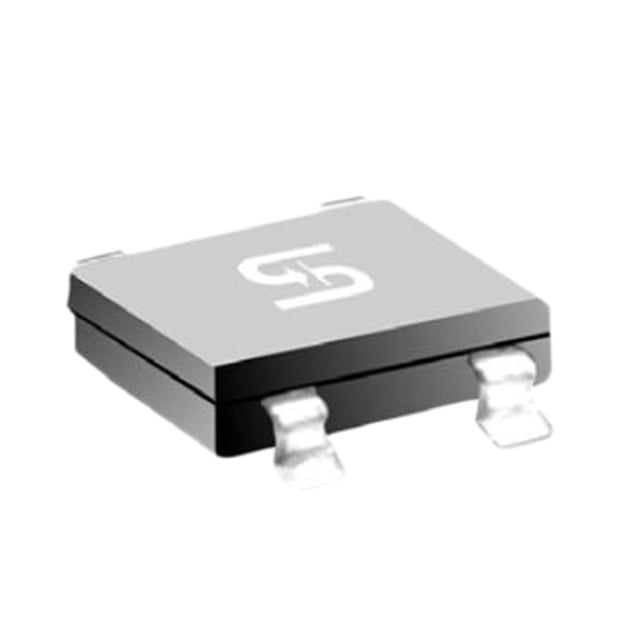
Q1: What is the SMC Diode Solutions ABS10?
A1: The SMC Diode Solutions ABS10 is a Schottky diode designed for high-efficiency switching applications, offering low forward voltage drop and fast switching speed.
Q2: What are the key features of the ABS10 diode?
A2: The ABS10 features low forward voltage, high current handling capabilities, fast switching times, and excellent thermal stability, making it suitable for various power and signal applications.
Q3: What is the maximum reverse voltage of the ABS10 diode?
A3: The maximum reverse voltage of the ABS10 is 40V, which ensures it is suitable for medium voltage applications.
Q4: What is the forward current rating of the ABS10 diode?
A4: The ABS10 diode has a maximum forward current rating of 1.0A, making it suitable for use in applications requiring moderate current levels.
Q5: What is the forward voltage drop of the ABS10?
A5: The forward voltage drop of the ABS10 is typically 0.4V at a forward current of 1A, providing efficiency in power-conversion circuits.
Q6: What type of diode is the ABS10?
A6: The ABS10 is a Schottky diode, known for its low forward voltage drop and fast recovery times, ideal for applications that require high-speed switching.
Q7: What is the package type for the ABS10 diode?
A7: The ABS10 comes in a surface-mount SOD-123 package, which is compact and commonly used in modern electronic assemblies.
Q8: What is the maximum junction temperature for the ABS10 diode?
A8: The maximum junction temperature for the ABS10 is 125°C, which allows it to operate in a variety of environments without overheating.
Q9: Can the ABS10 diode be used in power supply circuits?
A9: Yes, the ABS10 is well-suited for power supply applications due to its low forward voltage drop, which reduces power loss and improves efficiency.
Q10: Is the ABS10 diode suitable for automotive applications?
A10: Yes, the ABS10 is suitable for automotive applications, as it can handle high voltage spikes and provides reliability in harsh environments.
Q11: What is the reverse recovery time of the ABS10 diode?
A11: The ABS10 diode features a very fast reverse recovery time, typically in the range of nanoseconds, which makes it ideal for high-frequency switching circuits.
Q12: How does the ABS10 diode improve system efficiency?
A12: The low forward voltage drop and fast switching characteristics of the ABS10 help reduce power loss and enhance the efficiency of circuits like power supplies and converters.
Q13: Can the ABS10 be used in rectifier circuits?
A13: Yes, the ABS10 is commonly used in rectifier circuits due to its low forward voltage drop and ability to handle moderate currents effectively.
Q14: What is the typical application of the ABS10 diode?
A14: The ABS10 is typically used in power rectification, voltage regulation, DC-DC converters, and as a protection diode in various electronic circuits.
Q15: Is the ABS10 diode lead-free?
A15: Yes, the ABS10 diode is lead-free and meets RoHS (Restriction of Hazardous Substances) standards, making it suitable for environmentally-conscious designs.
Q16: What is the breakdown voltage of the ABS10 diode?
A16: The ABS10 diode has a reverse breakdown voltage of 40V, ensuring it can withstand moderate reverse voltage without damage.
Q17: How does the ABS10 compare to other types of diodes?
A17: The ABS10, being a Schottky diode, offers a lower forward voltage drop and faster switching speed compared to regular PN-junction diodes, making it ideal for high-efficiency and high-speed applications.
Q18: What is the capacitance of the ABS10 diode?
A18: The ABS10 has a low junction capacitance, which helps it perform efficiently in high-speed switching applications, reducing the chances of signal distortion.
Q19: Can the ABS10 be used in high-power circuits?
A19: While the ABS10 is designed for medium-power applications with a 1.0A forward current rating, it is not intended for high-power circuits requiring much higher current ratings.
Q20: What is the significance of the SMC Diode Solutions ABS10's low forward voltage?
A20: The low forward voltage of the ABS10 reduces power loss in electronic circuits, improving energy efficiency and preventing excessive heating in power-conversion applications.