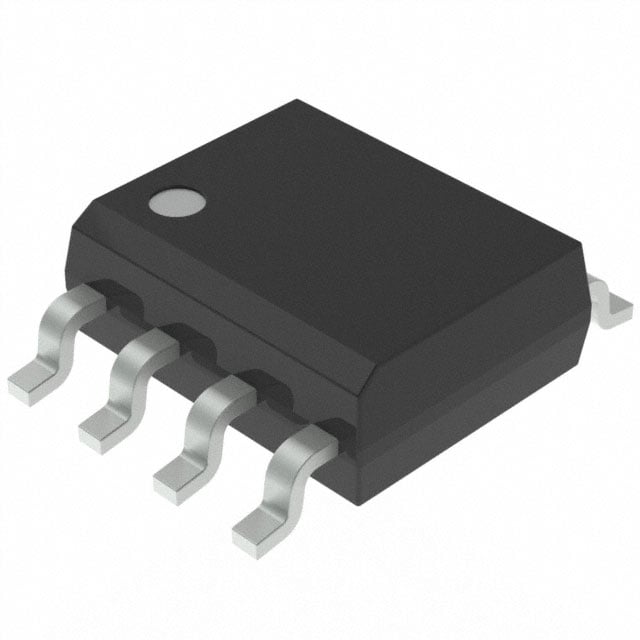
Q1: What is the Microchip Technology AT24C02C-SSHM-T?
A1: The Microchip Technology AT24C02C-SSHM-T is a 2Kb I2C EEPROM (Electrically Erasable Programmable Read-Only Memory) with a 2-wire serial interface.
Q2: What is the memory organization of the AT24C02C-SSHM-T?
A2: The AT24C02C-SSHM-T is organized as 256 x 8 bits, providing 2Kb of storage with 8-bit data access.
Q3: What is the supply voltage for the AT24C02C-SSHM-T?
A3: The AT24C02C-SSHM-T operates with a supply voltage range of 1.7V to 5.5V, which makes it suitable for a wide range of applications.
Q4: What is the maximum clock frequency of the AT24C02C-SSHM-T?
A4: The AT24C02C-SSHM-T supports a maximum clock frequency of 400kHz in standard I2C mode for data transfer.
Q5: What is the package type for the AT24C02C-SSHM-T?
A5: The AT24C02C-SSHM-T is available in a small-outline (SOIC) package with 8 pins, offering a compact and efficient solution for embedded systems.
Q6: How many write cycles can the AT24C02C-SSHM-T support?
A6: The AT24C02C-SSHM-T supports a minimum of 1 million write cycles, ensuring durability for applications requiring frequent write operations.
Q7: What is the data retention period for the AT24C02C-SSHM-T?
A7: The AT24C02C-SSHM-T offers a data retention period of up to 40 years, ensuring long-term reliable storage of data.
Q8: Does the AT24C02C-SSHM-T have built-in write protection?
A8: Yes, the AT24C02C-SSHM-T has built-in write protection features that can prevent accidental writes or overwrites to critical data.
Q9: Can the AT24C02C-SSHM-T be used for storing configuration data?
A9: Yes, the AT24C02C-SSHM-T is ideal for storing configuration data, system settings, and other non-volatile information in embedded systems.
Q10: What is the maximum operating temperature for the AT24C02C-SSHM-T?
A10: The AT24C02C-SSHM-T operates in a temperature range of -40°C to +85°C, which is suitable for industrial and automotive environments.
Q11: Does the AT24C02C-SSHM-T support multiple device addressing?
A11: Yes, the AT24C02C-SSHM-T supports multiple device addressing, allowing it to be used with multiple devices on the same I2C bus.
Q12: How is the AT24C02C-SSHM-T accessed in a system?
A12: The AT24C02C-SSHM-T is accessed through the I2C serial interface, where it communicates with the system via a master-slave configuration.
Q13: What is the write time for the AT24C02C-SSHM-T?
A13: The typical write time for the AT24C02C-SSHM-T is 5 milliseconds, providing efficient data writing performance.
Q14: Does the AT24C02C-SSHM-T have an internal clock?
A14: No, the AT24C02C-SSHM-T does not include an internal clock, relying on the external clock provided by the I2C bus during communication.
Q15: What are the main applications of the AT24C02C-SSHM-T?
A15: The AT24C02C-SSHM-T is used in various applications, including data storage, configuration settings, calibration values, and non-volatile memory storage in embedded systems.
Q16: Is the AT24C02C-SSHM-T compatible with other EEPROMs?
A16: Yes, the AT24C02C-SSHM-T is compatible with other EEPROMs that use the I2C protocol, allowing easy integration with different I2C-based systems.
Q17: How is the AT24C02C-SSHM-T programmed?
A17: The AT24C02C-SSHM-T is programmed via the I2C interface, where data is written to specific memory addresses in the device using the master-slave communication protocol.
Q18: Does the AT24C02C-SSHM-T require external components for operation?
A18: The AT24C02C-SSHM-T requires minimal external components—just pull-up resistors for the I2C bus, making it easy to integrate into most designs.
Q19: What kind of data can be stored in the AT24C02C-SSHM-T?
A19: The AT24C02C-SSHM-T can store any type of data, such as user settings, configuration information, calibration values, and small data buffers.
Q20: How is the AT24C02C-SSHM-T different from other EEPROMs?
A20: The AT24C02C-SSHM-T stands out due to its compact size, low power consumption, high endurance for write cycles, and long data retention period, making it a reliable choice for embedded memory applications.