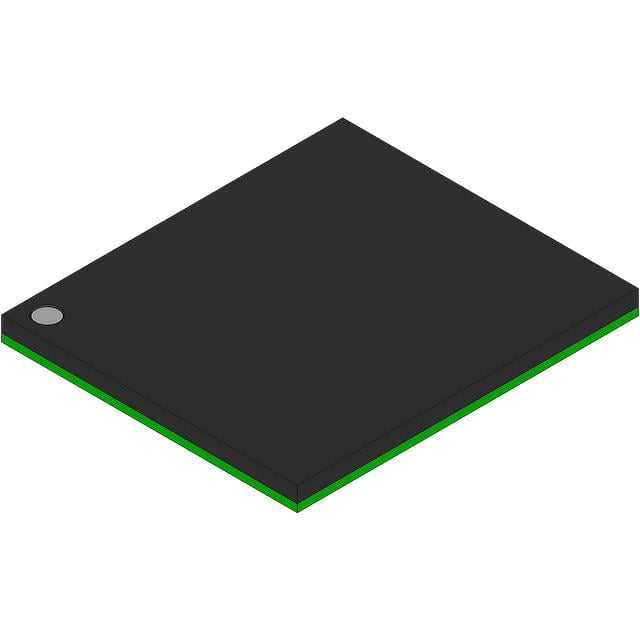
Q1: What is the Infineon Technologies CY7C53150-20AXI?
A: The Infineon Technologies CY7C53150-20AXI is a high-performance, low-latency static RAM (SRAM) device. It is designed to provide fast, efficient memory storage for applications that require quick access to data. The CY7C53150-20AXI features a 1.5 Mb memory size, organized in a 128K x 9-bit configuration, and is ideal for use in communication systems, embedded systems, and other applications that require high-speed memory with low power consumption.
Q2: What is the memory size of the Infineon Technologies CY7C53150-20AXI?
A: The CY7C53150-20AXI has a memory size of 1.5 Mb, organized as 128K x 9 bits. This provides 1.5 million bits of storage, making it suitable for a wide range of applications requiring moderate to high data storage and quick access capabilities.
Q3: What is the operating voltage of the Infineon Technologies CY7C53150-20AXI?
A: The CY7C53150-20AXI operates with a supply voltage of 3.3V, making it compatible with most modern digital systems that require low-voltage memory devices. The 3.3V operating voltage ensures compatibility with most logic circuits while maintaining low power consumption.
Q4: What is the access time of the Infineon Technologies CY7C53150-20AXI?
A: The CY7C53150-20AXI provides a fast access time of 20 ns, which allows for high-speed data retrieval. This makes it suitable for applications where rapid memory access is critical, such as real-time data processing, embedded systems, and high-performance computing applications.
Q5: What is the power consumption of the Infineon Technologies CY7C53150-20AXI?
A: The CY7C53150-20AXI is designed for low power consumption. It operates with a typical standby current of just a few microamperes (µA), which makes it energy-efficient and well-suited for battery-powered and power-sensitive applications. The low power consumption helps extend battery life and reduces the overall power footprint of the system.
Q6: What is the package type of the Infineon Technologies CY7C53150-20AXI?
A: The CY7C53150-20AXI is available in a 44-pin, lead-free, and RoHS-compliant TQFP (Thin Quad Flat Package) package. The compact form factor of the TQFP package makes it suitable for applications where space is limited, and its robust construction ensures reliable performance in various environments.
Q7: What are the main applications of the Infineon Technologies CY7C53150-20AXI?
A: The CY7C53150-20AXI is widely used in a variety of applications, including:
* Embedded systems
* Networking equipment
* Communication systems
* Digital signal processing (DSP)
* Industrial control systems
* Automotive electronics
Its fast access time and low power consumption make it ideal for applications requiring efficient and reliable memory storage.
Q8: How does the Infineon Technologies CY7C53150-20AXI compare to other SRAM devices?
A: The CY7C53150-20AXI stands out for its low power consumption, fast access time (20 ns), and 128K x 9-bit configuration, making it more efficient than many other SRAM devices in terms of speed and energy usage. Compared to other SRAM devices with higher access times or higher power consumption, the CY7C53150-20AXI provides a balanced solution for high-performance applications while maintaining energy efficiency.
Q9: What is the refresh cycle time of the Infineon Technologies CY7C53150-20AXI?
A: The CY7C53150-20AXI is a static RAM (SRAM) device, which means it does not require periodic refreshing like dynamic RAM (DRAM) devices. This eliminates the need for refresh cycles and reduces the complexity of memory management, ensuring that data is stored and accessed reliably without the need for constant refreshing.
Q10: What is the operating temperature range of the Infineon Technologies CY7C53150-20AXI?
A: The CY7C53150-20AXI operates within a temperature range of -40°C to +85°C. This wide operating temperature range makes it suitable for use in a variety of industrial, automotive, and commercial environments where temperature fluctuations are common.
Q11: Does the Infineon Technologies CY7C53150-20AXI support byte-enable functionality?
A: Yes, the CY7C53150-20AXI supports byte-enable functionality. This feature allows for more efficient memory access by enabling selective access to specific bytes of data, making it particularly useful in applications that require partial memory reads and writes, such as in communication systems and data storage devices.
Q12: What is the significance of the 9-bit data width of the Infineon Technologies CY7C53150-20AXI?
A: The 9-bit data width of the CY7C53150-20AXI allows for efficient data handling and higher precision when compared to standard 8-bit SRAM devices. This makes it suitable for applications that require the storage of data in odd bit-widths or need more than 8-bit data granularity, such as in certain embedded and communication systems.
Q13: How does the Infineon Technologies CY7C53150-20AXI handle data integrity?
A: The CY7C53150-20AXI provides reliable data storage through its static memory architecture, which maintains data integrity without the need for refresh cycles. Additionally, its low power consumption and robust design ensure that data remains stable under normal operating conditions, reducing the risk of data loss in power-sensitive or low-voltage environments.
Q14: How is the Infineon Technologies CY7C53150-20AXI configured and initialized?
A: The CY7C53150-20AXI is configured and initialized through standard SRAM control signals, including chip enable (CE), output enable (OE), write enable (WE), and address lines. The device does not require special initialization or configuration beyond setting the control signals to specify read, write, or standby modes. This simplicity allows for easy integration into digital systems.
Q15: Can the Infineon Technologies CY7C53150-20AXI be used in automotive applications?
A: Yes, the CY7C53150-20AXI is well-suited for automotive applications due to its wide operating temperature range, low power consumption, and reliable data access. It can be used in automotive systems for tasks such as sensor data processing, control system memory, and communication networks where quick data retrieval is necessary in harsh conditions.
Q16: What is the data retention time of the Infineon Technologies CY7C53150-20AXI?
A: As a static RAM device, the CY7C53150-20AXI retains data as long as power is supplied. Unlike dynamic RAM, which requires refreshing, SRAMs like the CY7C53150-20AXI provide non-volatile data retention during active operation and are ideal for applications where constant data availability is needed without refresh cycles.
Q17: How is the Infineon Technologies CY7C53150-20AXI integrated into a system?
A: The CY7C53150-20AXI can be integrated into a system by connecting it to the system’s address, control, and data lines. It uses standard control signals such as chip enable (CE), output enable (OE), and write enable (WE) for memory access. This straightforward integration process makes it easy to incorporate the CY7C53150-20AXI into a wide range of applications.
Q18: Does the Infineon Technologies CY7C53150-20AXI have any error detection or correction features?
A: The CY7C53150-20AXI does not have built-in error detection or correction features, as it is a static RAM (SRAM) device. However, external error detection or correction mechanisms can be implemented at the system level if needed, especially in applications where high reliability is crucial.
Q19: What are the key advantages of using the Infineon Technologies CY7C53150-20AXI over DRAM devices?
A: The key advantages of using the CY7C53150-20AXI over DRAM (dynamic RAM) devices include:
* No need for refresh cycles, as it is a static memory
* Faster access time (20 ns)
* Lower power consumption
* Simplified system design due to the absence of refresh control circuitry
These benefits make the CY7C53150-20AXI a more efficient and straightforward solution for applications requiring fast and reliable memory.
Q20: How does the Infineon Technologies CY7C53150-20AXI improve system performance?
A: The CY7C53150-20AXI improves system performance by providing fast, low-latency memory access with a 20 ns access time, enabling quick retrieval of data. Its low power consumption also contributes to overall system efficiency, especially in battery-powered or energy-sensitive systems, where minimizing energy usage is critical.