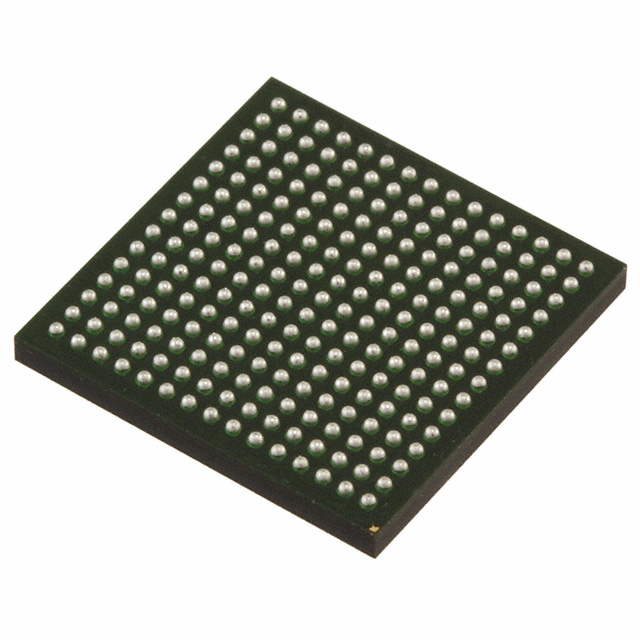
The Xilinx XC7Z030-2FFG676I is a member of the Zynq-7000 series, which combines a dual-core ARM Cortex-A9 processor with Xilinx 7-series FPGA logic. This integration allows for a unique combination of software programmability and hardware flexibility, making it suitable for a wide range of applications, including embedded systems, automotive, industrial automation, and more.
## Key Specifications:
1. Architecture:
- Processor: Dual-core ARM Cortex-A9
- FPGA Fabric: Xilinx 7-series FPGA architecture
2. Performance:
- Maximum Clock Frequency: Up to 1 GHz for the ARM Cortex-A9 cores
- FPGA Logic Cells: 30,000 logic cells
- DSP Slices: 90 DSP slices, which can be used for high-performance signal processing tasks.
3. Memory:
- On-chip Memory:
- 512 KB of L2 cache
- Up to 1 MB of block RAM (BRAM)
- External Memory Interface: Supports DDR3, DDR2, and LPDDR2 memory types.
4. I/O Capabilities:
- Total I/O Pins: 54 I/O pins
- I/O Standards: Supports various I/O standards including LVTTL, LVCMOS, and others.
- High-Speed Transceivers: Up to 4 transceivers with a maximum data rate of 1.5 Gbps.
5. Power Consumption:
- Typical Power Consumption: Approximately 1.5 W (varies based on configuration and usage)
- Power Supply Voltage: 1.0V for the core, 3.3V for I/O.
6. Package:
- Package Type: FFG676 (676-ball Fine Pitch Ball Grid Array)
- Dimensions: 23mm x 23mm
7. Development Tools:
- Software Development: Supports Xilinx SDK for software development, enabling C/C++ programming for the ARM cores.
- Hardware Development: Vivado Design Suite for FPGA design, allowing for HDL (VHDL/Verilog) programming.
8. Applications:
- Ideal for applications requiring real-time processing, such as:
- Video and image processing
- Motor control
- Industrial automation
- Medical devices
- Telecommunications
9. Connectivity:
- Ethernet: Integrated Ethernet MAC for networking applications.
- USB: Supports USB 2.0 OTG.
- Serial Interfaces: UART, SPI, I2C, and CAN interfaces available.
## Summary:
The Xilinx XC7Z030-2FFG676I is a versatile and powerful device that combines the processing capabilities of a dual-core ARM Cortex-A9 with the flexibility of an FPGA. Its specifications make it suitable for a wide range of applications, particularly in embedded systems where both hardware and software processing are required. The integration of high-speed transceivers, various memory interfaces, and extensive I/O options further enhances its usability in complex designs. With the support of Xilinx%27s development tools, designers can efficiently create and implement their applications, making the XC7Z030-2FFG676I a popular choice in the industry.