## Schottky Diodes: Principles and Characteristics
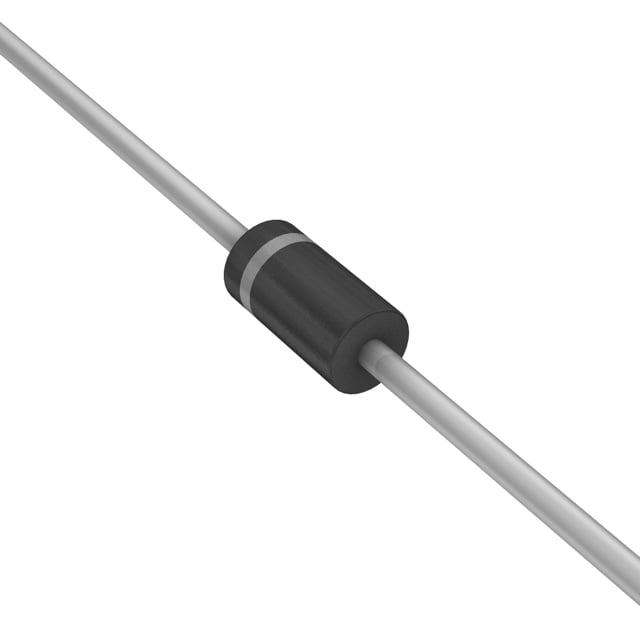
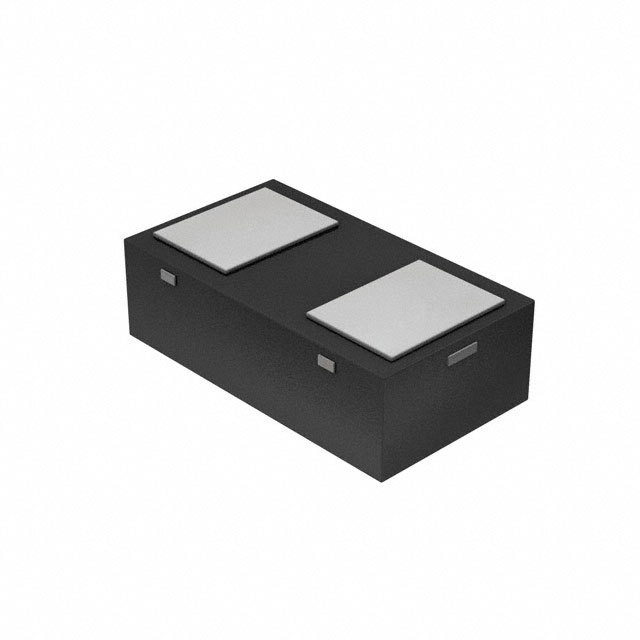
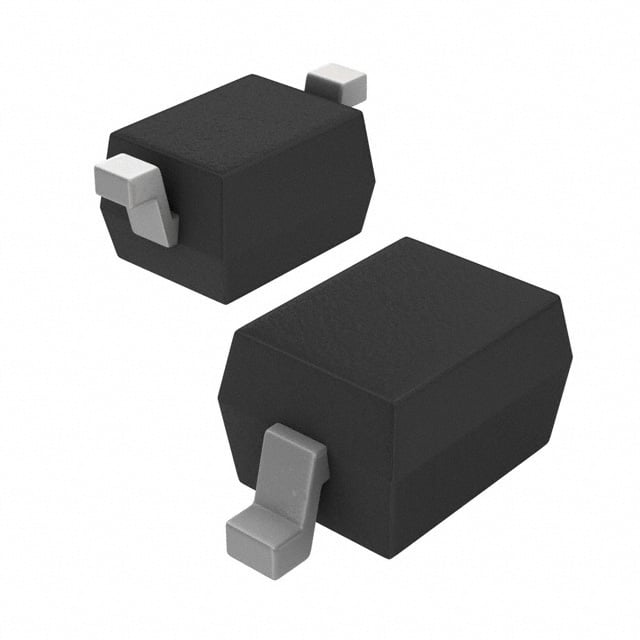
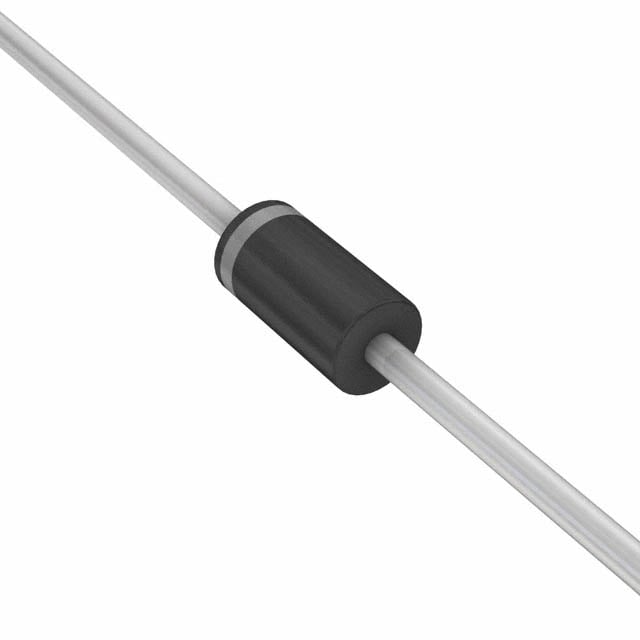
- Schottky diodes, also known as Schottky barrier diodes or hot-carrier diodes, are semiconductor devices widely used in various electronic applications.- Formation: They are formed by creating a metal-semiconductor junction, typically using metals like gold, platinum, or tungsten on an n-type semiconductor material (such as silicon or gallium arsenide).
- Schottky Barrier: This junction creates a Schottky barrier, which gives Schottky diodes their unique electrical properties.
- Key Characteristics:
- Low Forward Voltage Drop: Schottky diodes exhibit a low forward voltage drop (typically between 0.15 and 0.45 volts). This is due to the absence of a depletion layer in the metal-semiconductor junction, allowing rapid charge carrier movement.
- Fast Switching Speeds: The absence of a depletion layer also enables fast switching speeds.
- Low Reverse Recovery Time: Schottky diodes switch quickly from forward conducting to reverse blocking state.
- Limitations: They have relatively high reverse leakage current compared to conventional p-n junction diodes due to their low barrier height. Additionally, they are sensitive to temperature variations.
## Rectification Using Schottky Diodes
- Rectification is the process of converting alternating current (AC) to direct current (DC) using diodes.- Schottky diodes are particularly suited for rectification due to their:
- Fast Switching Speeds
- Low Forward Voltage Drop
- Two common types of rectifier circuits using Schottky diodes:
1. Half-Wave Rectifier:
- Uses a single Schottky diode.
- Allows only the positive half-cycle of the input AC voltage to pass through, blocking the negative half-cycle.
- Results in a pulsating DC output with a frequency equal to the input AC frequency.
- Output waveform contains gaps.
2. Full-Wave Rectifier:
- Uses a bridge configuration of four Schottky diodes.
- Converts both positive and negative half-cycles of the input AC voltage into a continuous DC output.
- Provides a smoother DC output, suitable for stable power supply applications.
## Applications of Schottky Diode Rectifiers
- Schottky diodes find applications in:- Power conversion circuits
- High-frequency circuits
- Renewable energy systems
- Solar panel applications
- Low voltage, high current scenarios
Remember that Schottky diodes are powerful tools for rectification, but their specific use cases depend on the application requirements and constraints¹²³.
(1) Schottky Diode Rectifier | How it works, Application & Advantages. https://www.electricity-magnetism.org/schottky-diode-rectifier/.
(2) Schottky Diode Characteristics and Applications | Wolfspeed. https://www.wolfspeed.com/knowledge-center/article/schottky-diode-characteristics-and-applications/.
(3) Schottky Diode or Schottky Barrier Semiconductor Diode. https://www.electronics-tutorials.ws/diode/schottky-diode.html.
icDirectory Limited | https://www.icdirectory.com/a/blog/can-we-use-schottky-diodes-for-rectification.html