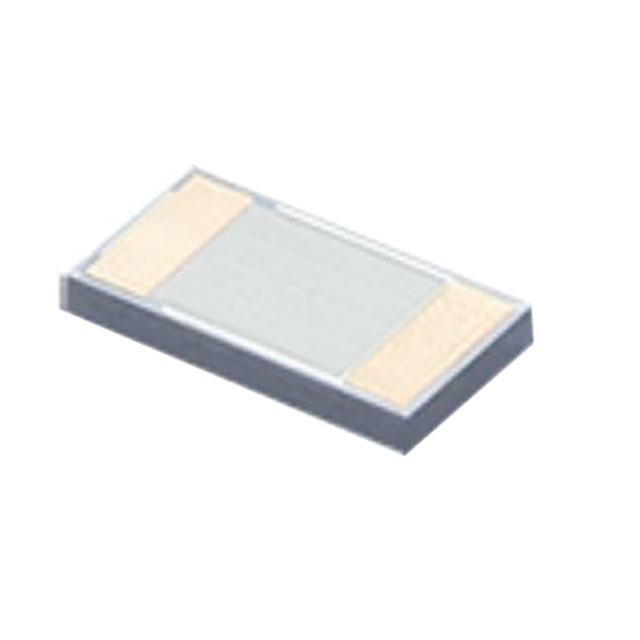
The Murata Manufacturing 935146528247-W0T is a multilayer ceramic chip inductor designed for high-frequency applications requiring compact form factors and stable inductive performance. This device is positioned as a passive component suitable for surface-mount technology (SMT) assemblies, providing predictable inductance with low parasitic resistance across a wide frequency range. Its primary function is to store energy in a magnetic field and provide impedance for alternating current signals while offering minimal DC resistance, making it appropriate for filtering, decoupling, and impedance matching in RF and power applications. The inductor is characterized by a construction that optimizes both magnetic flux containment and mechanical robustness, ensuring reliable performance under typical board assembly processes and operational stresses.
## Electrical Characteristics
The inductor exhibits a nominal inductance defined under standard test conditions, typically at a specified frequency and ambient temperature, which provides a reference for circuit designers to predict its reactive behavior. Its quality factor, or Q, indicates the ratio of energy stored to energy dissipated per cycle, which is essential for assessing efficiency in high-frequency signal paths. The series resistance, or DC resistance (DCR), of the device is minimized to reduce power loss and voltage drop in series with the load. The component demonstrates stable inductance across a defined operating frequency range, ensuring that its impedance characteristics remain consistent for signal integrity in RF circuits. Tolerance on the inductance value is specified to accommodate manufacturing variation, providing designers with predictable performance margins. The self-resonant frequency (SRF) of the device represents the point at which the inductive reactance is canceled by parasitic capacitance, defining the upper frequency limit for effective inductive behavior.
## Operating Conditions and Environmental Constraints
The 935146528247-W0T is rated for continuous operation within a defined temperature range, ensuring mechanical and electrical stability under normal and elevated thermal conditions. It is designed to withstand standard SMT reflow soldering profiles without significant degradation of inductance or Q factor. The inductor is intended for operation in non-corrosive, non-condensing environments unless further protection, such as conformal coating, is applied. The maximum current rating is defined to prevent core saturation and excessive temperature rise, which could compromise magnetic properties and reliability. Derating considerations are advised when used near the maximum rated current or at elevated ambient temperatures to maintain inductive performance and long-term reliability. The component also exhibits resilience to mechanical stress such as board flexure and vibration within the limits defined by its package and material construction.
## Input and Output Characteristics
Being a passive two-terminal device, the inductor does not have active logic inputs or outputs; its electrical behavior is entirely governed by its impedance and series resistance. Voltage applied across its terminals results in current flow determined by the inductive reactance at the operating frequency, with low-frequency behavior approximating a series resistor and high-frequency behavior dominated by inductive reactance until approaching the self-resonant point. The polarity is non-critical, as the magnetic material exhibits symmetric behavior under standard AC excitation. Impedance versus frequency curves are provided to aid designers in matching the inductor to circuit requirements, highlighting regions of effective filtering and energy storage. The device can be combined with capacitors to form LC networks for tuning, decoupling, or bandpass and low-pass filter applications.
## Typical Applications
This inductor is widely utilized in high-frequency power conversion circuits, including DC-DC converters, where it functions as an energy storage element to smooth current and limit voltage ripple. It is also suitable for RF signal paths as part of impedance matching networks, providing controlled reactance to maintain signal integrity. Decoupling applications on power supply rails leverage its low series resistance and stable inductance to reduce high-frequency noise and transients. Additionally, the component can be used in EMI suppression applications, forming part of low-pass LC networks to attenuate conducted interference. Its compact, surface-mount construction allows deployment in densely populated printed circuit boards, including mobile devices, communication modules, and consumer electronics where board space and signal fidelity are critical design considerations.
## Mechanical and Packaging Attributes
The device is supplied in a tape-and-reel format optimized for automated pick-and-place assembly, with a package size that balances current handling capability and board space constraints. The multilayer ceramic construction ensures mechanical robustness, reducing the risk of cracking during handling and soldering. The terminations are designed for solderability, providing reliable electrical and mechanical connections with standard SMT processes. Thermal expansion and contraction are controlled through the ceramic substrate and metallization choices, minimizing stress-induced shifts in inductance and maintaining performance consistency throughout operational temperature cycles.
## Summary and Conclusion
The Murata Manufacturing 935146528247-W0T represents a high-performance multilayer ceramic inductor suitable for high-frequency, surface-mount applications where stable inductive characteristics and low series resistance are required. Its electrical performance, including nominal inductance, quality factor, series resistance, and self-resonant frequency, provides predictable impedance behavior for RF, power conversion, and EMI suppression circuits. The device is designed for reliable operation under standard thermal and mechanical conditions associated with SMT assembly and end-use environments. Its passive two-terminal nature, coupled with compact construction and surface-mount compatibility, makes it highly suitable for integration into densely packed electronic systems, providing effective filtering, decoupling, and energy storage functions. Overall, the 935146528247-W0T delivers a combination of electrical stability, mechanical robustness, and manufacturing compatibility that aligns with professional design requirements in modern electronic applications.