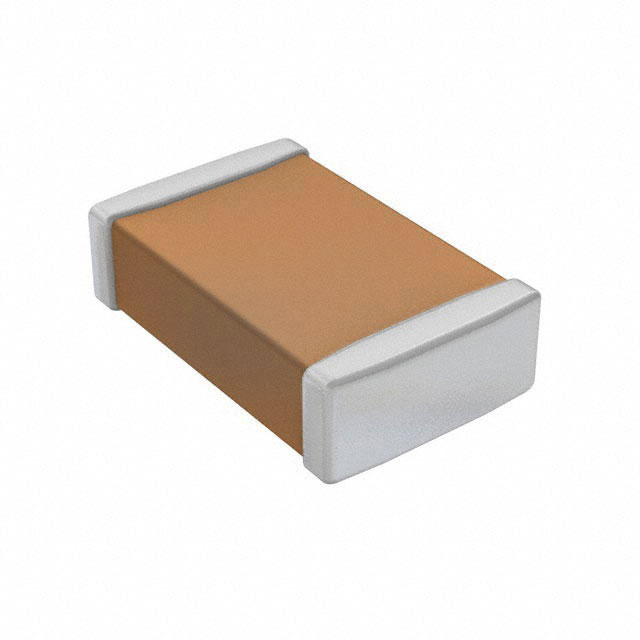
## 1. Evolutionary Improvements in MLCC Dielectrics and Processing
Researchers and manufacturers (Murata, TDK, Samsung Electro-Mechanics) are pushing classic ceramic technology further with:- Lead-free relaxor ferroelectrics (RFE) based on Na₀.₅Bi₀.₅TiO₃ (NBT) systems
Systems such as NKBTNN–CaZrO₃ or NBT–SBT–BMN achieve record-high permittivity (εᵣ ≈ 839 ±15%) and ultra-wide temperature stability (ΔC/C < ±15% from –70°C to 337°C) with low loss (tan δ ≤ 0.02). These overcome the Curie-point limitations of traditional BaTiO₃ and enable true “ultra-wide-temperature” (UWT) MLCCs for automotive (800 V) and high-temperature power electronics.
- Polar-glass-state (PGS) engineering
In Bi₀.₅Na₀.₅TiO₃-based MLCCs, nanoscale disorder disrupts long-range ferroelectric order, delivering ultrahigh energy-storage density (>10–14 J/cm³), >85–97% efficiency, and exceptional thermal/cycling stability—ideal for pulsed-power and on-chip energy storage.
- Nano-powder, core-shell, and textured dielectrics
Ultra-thin layers (<0.5 µm, down to ~0.3 µm) using advanced BaTiO₃, PMN-PT, or BST formulations, combined with compositionally graded or textured microstructures, increase volumetric efficiency and energy density while reducing piezoelectric/microphonic effects. Murata's 006003-inch (0.16 × 0.08 mm) MLCC (2024) already demonstrates 75% volume reduction.
- High-temperature (>200°C) and high-voltage (>1000 V) formulations
X8R/X8T, SrTiO₃-based, or new perovskite oxides push operating limits for EV powertrains and industrial applications.
These improvements keep MLCCs cost-effective and compatible with existing SMT lines while raising capacitance density and reliability.
## 2. Silicon Capacitors – The Strongest Direct Replacement
Silicon-based capacitors (trench or planar 3D structures fabricated with semiconductor processes) are already commercial and replacing MLCCs in high-stability, high-frequency, and space-critical applications.Key advantages over MLCCs:
- Near-zero capacitance variation: < ±0.1%/V bias and < ±20 ppm/°C temperature (–50°C to 200°C), eliminating the 50–80% derating required for X7R/X5R parts.
- Ultra-low parasitics: ESL as low as 1/16th of equivalent 0402 MLCCs; ESR also lower → superior high-frequency decoupling (GHz range) and power integrity for CPUs/GPUs/AI accelerators.
- Higher reliability: No flex cracking, no tombstoning, TDDB >10–12 years at high temperature, extremely low leakage (<500 pA).
- Form-factor superiority: Thickness down to <50 µm (thinner than any MLCC), capacitance density up to 5× higher in some E-CAP™ implementations (Empower Semiconductor), and easy integration into SiP, interposers, or on-package decoupling.
Commercial examples:
- Murata/IPDiA PICS series
- Empower E-CAP™
- ELSPES
- ROHM silicon capacitors
These are already qualified for RF, medical, aerospace, and battery-powered devices where MLCC drift or mechanical fragility is unacceptable. In many decoupling networks, one silicon capacitor replaces several paralleled MLCCs while improving PDN impedance flatness.
## 3. Polymer Multilayer Capacitors (PMLCAP) and Other Hybrids
- Polymer multilayer technology (Rubycon MF Series, Panasonic/KEMET polymer) offers larger single-unit capacitance, lower ESR in some regimes, and the ability to replace multiple small MLCCs in power-supply decoupling or audio/sensor lines. High-voltage PMLCAPs can also displace film capacitors at roughly half the size.- Embedded thin-film capacitors in PCBs, silicon interposers, or package substrates eliminate discrete components entirely, cutting inductance to near-zero and enabling higher-density modules (already used in high-end servers and RF modules).
## 4. Other Emerging Materials
- Glass-ceramics and perovskite oxides (beyond BaTiO₃) for tunable or ultra-low-loss RF applications.- Graphene/nanocomposite-enhanced ceramics for improved thermal conductivity and toughness.
- Circular/recycled materials and lead-free processes driven by sustainability regulations.
## Outlook for Engineers
- Short-to-medium term (2026–2030): Expect continued MLCC evolution (thinner layers, NBT/relaxor dielectrics, 01005/008004 sizes) to handle most general-purpose and automotive needs.- High-performance niches (AI servers, 5G/mmWave, ADAS, medical implants): Silicon capacitors are already the superior choice for stability, parasitics, and integration.
- Ultra-miniaturization or embedded designs: Thin-film silicon or PCB-embedded passives will displace discrete MLCCs.
Recommendation: In new designs, evaluate silicon capacitors first for any rail requiring tight tolerance across temperature/voltage or operating >1 GHz. For cost-sensitive bulk decoupling, enhanced Class II MLCCs or PMLCAP hybrids remain viable. Always verify with manufacturer SPICE/S-parameter models and perform full PDN simulation—many “MLCC replacements” now outperform legacy ceramics in real-world conditions.
The MLCC era is not ending, but it is rapidly diversifying; the winners will be hybrid solutions that combine the best of ceramic, silicon, and polymer technologies.
icDirectory Limited | https://www.icdirectory.com/a/blog/what-future-materials-or-technologies-could-replace-or-improve-upon-current-mlccs.html


-0,80mm-Tan.jpg)

.jpg)

-0,33mm.jpg)

-0,95mm_BN.jpg)