## Microprocessor
Definition:
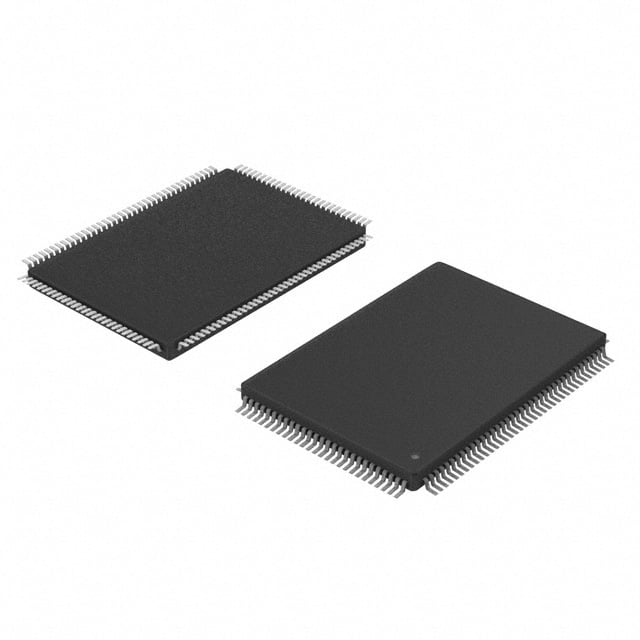
- A microprocessor is a central processing unit (CPU) on a single integrated circuit (IC) chip that executes instructions from a computer program. It performs arithmetic, logical, control, and input/output (I/O) operations specified by the instructions.
Architecture:
- Fixed Functionality: The architecture of a microprocessor is fixed when it is manufactured. It includes a predefined set of instructions (Instruction Set Architecture or ISA) that it can execute.
- Sequential Processing: Microprocessors are designed to execute instructions sequentially. They fetch, decode, and execute instructions in a linear sequence.
- General-Purpose: Microprocessors are designed for general-purpose computing. They are used in a wide range of devices, from personal computers and smartphones to embedded systems.
Applications:
- Suitable for applications that require a lot of sequential processing tasks such as running operating systems, software applications, and complex computations.
- Commonly found in general computing devices like PCs, laptops, tablets, and smartphones.
Flexibility:
- Software Flexibility: Microprocessors are flexible in terms of software. You can change the functionality of a microprocessor by loading different programs, but the hardware remains unchanged.
- Hardware Inflexibility: The hardware configuration and logic gates within the microprocessor are fixed and cannot be altered once manufactured.
Performance:
- Performance improvements in microprocessors typically come from increasing clock speeds, improving instruction sets, adding more cores, and enhancing cache memory.
## FPGA (Field-Programmable Gate Array)
Definition:
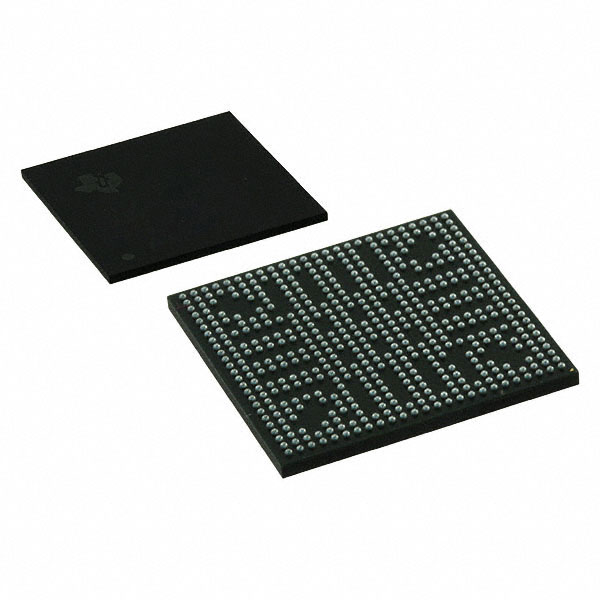
- An FPGA is an integrated circuit designed to be configured by the customer or designer after manufacturing—hence “field-programmable.” It contains an array of programmable logic blocks and interconnects that can be configured to perform a specific function.
Architecture:
- Reconfigurable Hardware: FPGAs consist of a matrix of configurable logic blocks (CLBs), programmable interconnects, and I/O blocks. Users can configure these blocks to implement custom hardware functionality.
- Parallel Processing: FPGAs are well-suited for parallel processing tasks. Multiple operations can be executed simultaneously, making FPGAs ideal for applications requiring high-speed data processing.
Applications:
- Suitable for applications where custom hardware acceleration is needed, such as signal processing, telecommunications, automotive systems, aerospace, and high-frequency trading.
- Commonly used in prototyping, hardware emulation, and custom hardware solutions where flexibility and adaptability are crucial.
Flexibility:
- Hardware Flexibility: FPGAs offer high flexibility at the hardware level. You can reconfigure the internal structure to create custom hardware designs tailored to specific applications.
- Software and Hardware Customization: Unlike microprocessors, FPGAs allow you to design custom data paths and control logic, enabling optimization for particular tasks.
Performance:
- FPGAs can achieve higher performance for specific tasks due to their ability to execute many operations in parallel. However, this requires detailed knowledge of digital design to fully exploit their capabilities.
- Performance improvements come from optimizing the configuration of logic blocks and interconnects for specific tasks, rather than simply increasing clock speeds.
## Key Differences
1. Configuration:
- Microprocessor: Configuration is done through software, and its hardware functionality is fixed.
- FPGA: Configuration is done through hardware description languages (HDLs) like VHDL or Verilog, and its hardware functionality is reconfigurable.
2. Execution Model:
- Microprocessor: Executes instructions sequentially based on a predefined instruction set.
- FPGA: Executes operations in parallel based on custom-configured logic circuits.
3. Flexibility:
- Microprocessor: Software flexible but hardware inflexible.
- FPGA: Both hardware and software flexible.
4. Performance:
- Microprocessor: Optimized for general-purpose tasks with improvements coming from architectural enhancements and increased clock speeds.
- FPGA: Optimized for specific tasks with performance gains achieved through parallelism and custom hardware configurations.
5. Development Complexity:
- Microprocessor: Easier to develop software applications using high-level programming languages.
- FPGA: Requires expertise in digital design and HDLs to configure and optimize hardware functionality.
In summary, microprocessors and FPGAs serve distinct roles in digital electronics. Microprocessors are general-purpose, fixed-function CPUs optimized for sequential instruction execution, while FPGAs are highly flexible, reconfigurable devices optimized for parallel processing and custom hardware implementations. The choice between the two depends on the specific requirements of the application, including performance needs, flexibility, development complexity, and cost considerations.
icDirectory Limited | https://www.icdirectory.com/a/blog/what-is-the-difference-between-a-microprocessor-and-an-fpga-field-programmable-gate-array.html