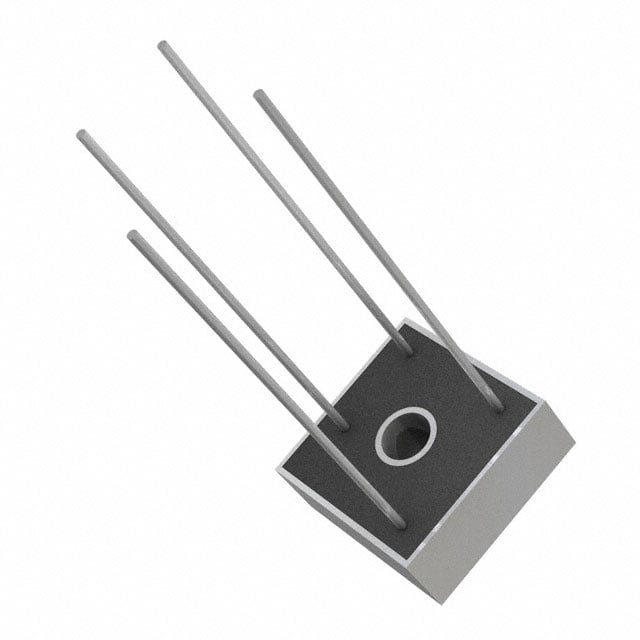
Let%27s explore how to minimize ripple voltage in a bridge rectifier. Ripple voltage refers to the AC component present in the rectified DC output, and reducing it ensures a smoother and more stable DC supply. Here are some methods:
1. Smoothing Capacitor:
- The most common technique is to add an electrolytic capacitor in parallel with the load (resistor).
- During the positive half-cycle of the AC input, the capacitor charges.
- During the negative half-cycle, the capacitor discharges, supplying current to the load.
- This effectively reduces the ripple by compensating for the gaps between half-cycles.
- Larger capacitor values result in better smoothing.
2. Filtering:
- The capacitor acts as a filter, storing energy during high voltage peaks and releasing it during low voltage periods.
- The larger the capacitor, the more energy it can store, leading to reduced ripple.
- The ripple voltage depends on the frequency of the AC input and the load current.
3. Load Resistance:
- Increasing the value of the load resistance (RL) also reduces ripple.
- A higher RL results in a slower discharge of the capacitor during the negative half-cycle.
- However, this trade-off affects the overall DC output voltage.
4. Frequency Considerations:
- Ripple voltage is inversely proportional to the frequency of the AC input.
- Lower-frequency AC (such as from transformers) results in higher ripple.
- High-frequency AC (such as from switching power supplies) reduces ripple.
5. Inductor-Capacitor (LC) Filter:
- Combining an inductor (coil) with the capacitor forms an LC filter.
- The inductor further smooths the output by storing energy during the positive half-cycle and releasing it during the negative half-cycle.
- LC filters are commonly used in high-power applications.
6. Voltage Regulators:
- For critical applications, consider using voltage regulators (such as linear or switching regulators).
- These devices maintain a stable output voltage regardless of input variations.
In summary, adding a smoothing capacitor and optimizing load resistance are effective ways to minimize ripple voltage in a bridge rectifier.
For further exploration, you can refer to resources like [this detailed guide](https://theengineeringmindset.com/full-bridge-rectifier-explained/) that provides additional insights.
(1) Full Wave Rectifier and Bridge Rectifier Theory. https://www.electronics-tutorials.ws/diode/diode_6.html.
(2) Full Bridge Rectifier Explained - The Engineering Mindset. https://theengineeringmindset.com/full-bridge-rectifier-explained/.
(3) Single-phase diode bridge rectifier | How it works, Application .... https://www.electricity-magnetism.org/single-phase-diode-bridge-rectifier/.
(4) Ripple Voltage in Rectifiers - Inst Tools. https://instrumentationtools.com/ripple-voltage-rectifiers/.
icDirectory Limited | https://www.icdirectory.com/a/blog/how-can-ripple-voltage-be-minimized-in-a-bridge-rectifier.html

☰